

Easements in Pennsylvania: What You Need to Know
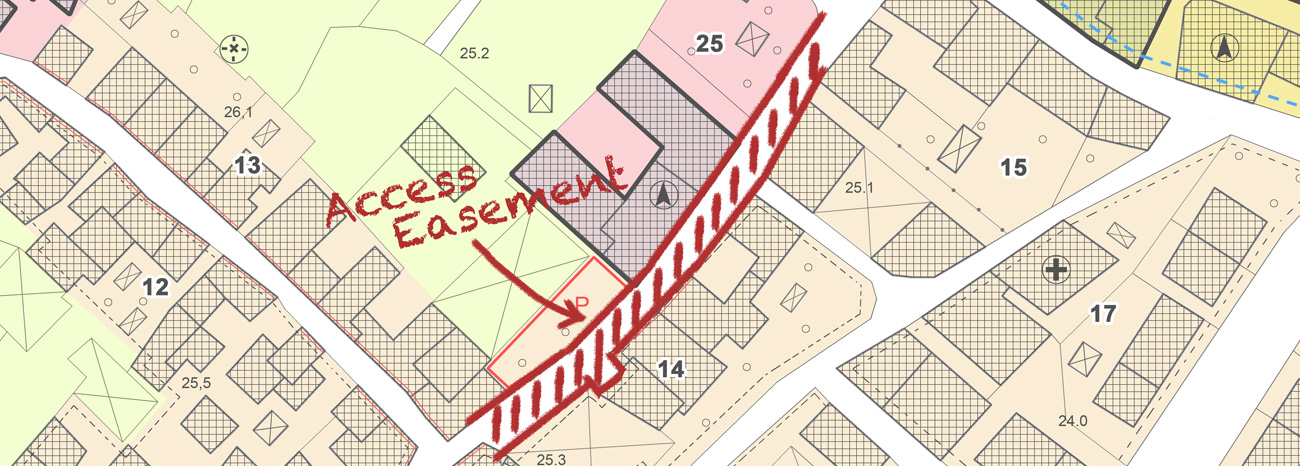
Whether you are buying property, developing land, or resolving an access dispute, understanding easements is essential to protecting your property rights. Easements grant rights that allow the lawful use of another person’s real estate. Pennsylvania law recognizes several types of easements, each with its own legal framework.
This article outlines five major easement categories that Pennsylvania property owners and real estate professionals should understand.
Express Easements
An express easement is created by a written document, most often a deed, recorded plan, or other written agreement. It appears in the property’s chain of title, which is recorded with the Office of the Recorder of Deeds in the county where the property is located.
Because express easements are written, they usually provide a certain level of clarity and certainty. A typical easement will include the terms and limitations of use, the precise location of the easement, and the beneficiary, also known as the grantee. When recorded, and unless expressly stated otherwise, the easement is generally binding on future owners of both the servient estate, meaning the grantor’s land, and the dominant estate, meaning the grantee’s land.
Practice Note: A title search is always recommended before closing on any property. Confirm whether any easements exist, whether they are properly recorded, and whether they are consistent with your intended use of the land. For example, a pipeline easement through land intended for a small residential subdivision might not be compatible with that planned use.
Easements by Implication
An easement by implication may arise when the use of land shows that the parties intended continued access, even though no written easement exists. Pennsylvania courts apply two co-existing standards.
Under the traditional test, the party claiming an implied easement must show separation of title, long-continued and obvious use suggesting permanence, and necessity for the beneficial enjoyment of the property.
Under the Restatement (Second) test, courts balance several factors, including intent, prior use, consideration, degree of necessity, and the knowledge of the parties. No single factor controls the outcome. The goal is to determine the parties’ actual or implied intent at the time of conveyance.
An easement by implication has the same force and effect as an express easement. However, courts often must determine whether the easement ever existed, how far it extends, and whether it is enforceable. For example, an old path through various parts of a wooded tract, later turned into a residential subdivision, might not remain an easement if that intent cannot be inferred from the conversion of raw, wooded land into a multi-lot subdivision with street and sidewalk improvements.
Practice Note: Courts focus heavily on the knowledge of the party claiming the easement, the nature of the prior use, and the reasonable necessity for continued access.
Easements by Necessity
An easement by necessity exists only when it is strictly necessary, not merely convenient, for a landowner to access their property through the property of another. Under Pennsylvania law, three conditions must be met:
- Unity of title: The dominant parcel, meaning the landowner’s property, and the servient parcel, meaning the property over which the easement is claimed, were once owned by the same person.
- Severance: The commonly owned land was later divided into separate parcels.
- Strict necessity: Access to a public road is essential for use of the property, both at the time of severance and when the easement is exercised.
Courts reject claims based on convenience or partial access. Typically, a property is considered landlocked only if there is no other legal route to reach the property.
Practice Note: Easements by necessity end automatically once the necessity no longer exists.
Prescriptive Easements
A prescriptive easement arises through long-term use that is adverse and without permission for at least 21 years. To establish this type of easement, the claimant must prove that the use was:
- Adverse;
- Open and notorious;
- Continuous and uninterrupted for 21 years; and
- Proven by clear and positive evidence.
If the property owner whose land is being used granted permission at any point, the prescriptive easement claim may fail.
Practice Note: To help prevent unwanted prescriptive rights, property owners may consider giving limited, clear, written permission for a neighbor’s or contractor’s recurring access across the property. Permission may defeat a claim for a prescriptive easement. You should consult with an attorney before doing so.
Unenclosed Woodlands
Pennsylvania’s version of the Unenclosed Woodlands Act, found at 68 P.S. § 411, limits the formation of prescriptive easement rights. The Act provides: “No right of way shall be hereafter acquired by user where such way passes through uninclosed woodland.”
Pennsylvania courts strictly interpret this Act. For example, one generally cannot acquire a prescriptive easement through wooded, unfenced land. Even decades of continuous passage through unenclosed forested acreage will not create a legal right of way.
Practice Note: The law protects rural landowners by preventing the loss of property rights simply because others have crossed their wooded areas.
Protecting Your Rights and Avoiding Disputes
Easement disputes can quickly escalate into litigation. Whether you need to establish access or defend against an unauthorized claim, it is important to document land use clearly and understand which easement doctrines may apply.
Pennsylvania courts require strong factual proof, such as recorded instruments, consistent prior use, or strict necessity, to create or enforce an easement. Early legal guidance and a thorough title review can help avoid expensive and time-consuming boundary disputes later.
Final Takeaway
Easement law in Pennsylvania balances land access with property ownership rights. Aside from an express easement, many factors may come into play as the court examines claimed easement rights. Knowing whether an easement is express, implied, necessary, or prescriptive, and understanding the limits imposed by the Unenclosed Woodlands Act, can make a significant difference when buying, selling, developing, or evaluating access to land.
Have a Pennsylvania easement issue? Contact Eric B. Smith, Esquire.
Call: 215.540.2653
Email: esmith@timoneyknox.com
Eric B. Smith, Esquire, a partner at Timoney Knox, LLP, serves as Chair of the Firm’s Litigation Group and has been practicing in the field of real estate litigation since 1998. He has been consistently recognized by Super Lawyers and Best Attorneys since 2005. His commercial and real estate litigation practice spans across the Commonwealth of Pennsylvania.
Frequently Asked Questions
What is the difference between an easement and a right-of-way in Pennsylvania?
An easement in Pennsylvania is a legal right allowing one party to use another person’s property for a specific purpose, such as utilities, drainage, or access. A right-of-way is a specific type of easement that allows travel across land for ingress and egress. In short, all rights-of-way are easements, but not all easements involve access or passage.
Can a property owner block or revoke an existing easement in Pennsylvania?
A property owner generally cannot block, interfere with, or revoke a valid easement once it has been legally established. Easements may be terminated only through recognized legal doctrines such as mutual agreement, abandonment, merger of ownership, or adverse possession under limited circumstances. Interfering with an easement can expose a landowner to legal action, including injunctive relief.
How long does it take to establish a prescriptive easement in Pennsylvania?
To establish a prescriptive easement in Pennsylvania, a party must prove open, notorious, continuous, and adverse use of the property for at least 21 years. The claim must be supported by clear and convincing evidence. Occasional or permissive use will not satisfy the legal standard.
What qualifies as “necessity” for an easement by necessity in Pennsylvania?
An easement by necessity may arise when a property is landlocked and cannot be accessed without crossing another parcel. The necessity must exist at the time the property was divided from a commonly owned tract and must be more than mere convenience. Courts require that the easement be essential for the reasonable use and enjoyment of the property.
Does the Pennsylvania Unenclosed Woodlands Act prevent easement claims on rural or wooded land?
The Pennsylvania Unenclosed Woodlands Act does not prevent the creation or enforcement of all easements on rural or wooded land. However, it can affect whether long-term use of wooded, unfenced land can support a prescriptive easement claim. Property owners should carefully evaluate how the Act may affect long-term use rights.
How can I find out if there is an easement on my property before buying or selling real estate in Pennsylvania?
To determine whether an easement exists on a Pennsylvania property, review the deed, prior deeds in the chain of title, and any recorded surveys or subdivision plans filed with the county Recorder of Deeds. A professional title search through a title company or real estate attorney is the most reliable way to identify recorded easements or rights-of-way before buying or selling real estate.
About The Author(s):

Eric B. Smith
Mr. Smith, a partner of Timoney Knox, LLP, serves as Chair of the Firm’s Litigation Group and has been consistently recognized by Super Lawyers and Best Attorneys since 2005. In 2017 Mr. Smith served as the President of the Montgomery Bar Association. His commercial and real estate litigation practice spans across the Commonwealth of Pennsylvania.
Read Full BioTimoney Knox's Real Estate Law Group
Timoney Knox’s real estate attorneys are experienced in assisting our clients in buying and selling property; in mortgaging and borrowing against real estate; in interpreting and applying the wide variety of local land use and zoning laws; and in representing the needs and concerns of individuals, homeowners’ associations, condominiums, and planned communities. We can also help you with tax assessment appeals, mortgage foreclosures, and sheriff’s sales. We always strive to get an agreement all parties can live with and that appropriately addresses our clients’ concerns.

Commercial and Civil Litigation
Superior Court Vacates Injunction in Easement Dispute
Pennsylvania Superior Court vacates a permanent injunction in Herman v. Moss, clarifying limits on preliminary relief in easement disputes.
Read More
Real Estate Law
Adverse Possession in Pennsylvania: Requirements, the 21-Year Rule, and the 10-Year Exception
What are the requirements for adverse possession in Pennsylvania? Learn the elements, the 21-year rule, and when the 10-year contiguous-lot rule applies.
Read More
Commercial and Civil Litigation
Pennsylvania Supreme Court Denies Hideout Community’s Application For Appeal
The real estate litigation team at Timoney Knox prevailed on appeal in the case of Chan, et al., v. The Association of Property Owners of The Hideout, Inc., involving a group of Homeowners challenging unauthorized regulations restricting short term rentals adopted by The Association of Property Owners of The Hideout, Inc.
Read More